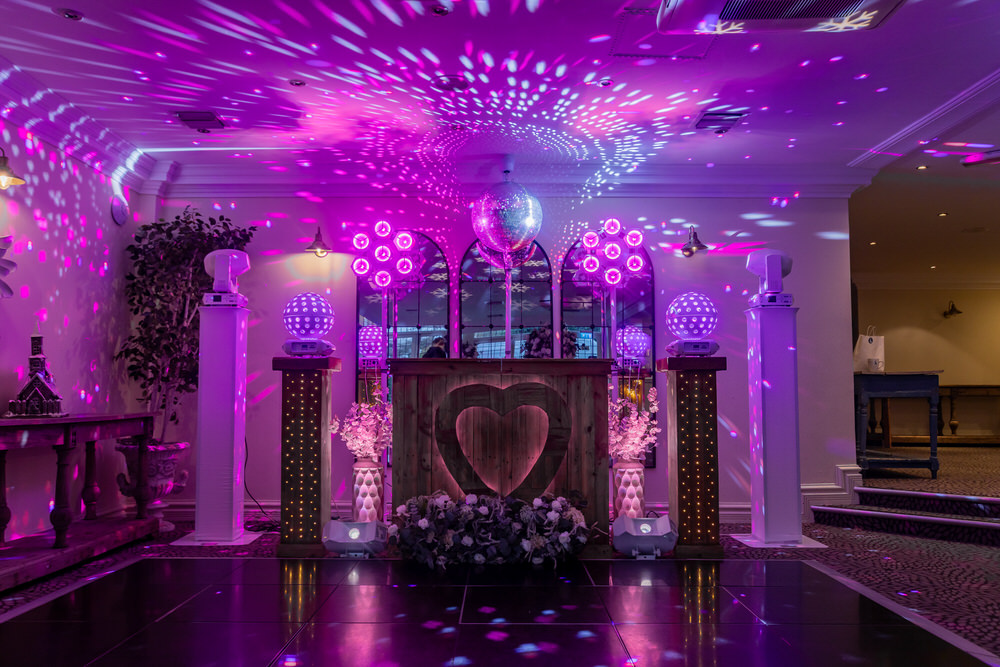
A wedding DJ is a genuine expense, and Spotify puts almost any song in the world in your pocket for £11.99 a month. So it's a completely fair question: what does a DJ actually add that a good playlist can't? The honest answer depends on the kind of evening you want, and after more than three decades doing this, we'd rather tell you that plainly than pretend every wedding needs the same answer.
Quick answer
A Spotify playlist can work well for a small, informal wedding where dancing isn't the main event, as long as you have decent sound equipment, a carefully planned set of playlists, a reliable person operating it, and a backup plan. For a traditional evening reception with a mixed-age guest list, dancing, announcements and requests, a good professional DJ almost always delivers more value. The real distinction isn't "DJ versus Spotify"; it's a skilled DJ versus a properly planned, properly operated DIY system. A well-run playlist can beat a poor DJ. But a good wedding DJ can do things no fixed playlist ever will.
Wedding DJ vs Spotify: The Quick Comparison
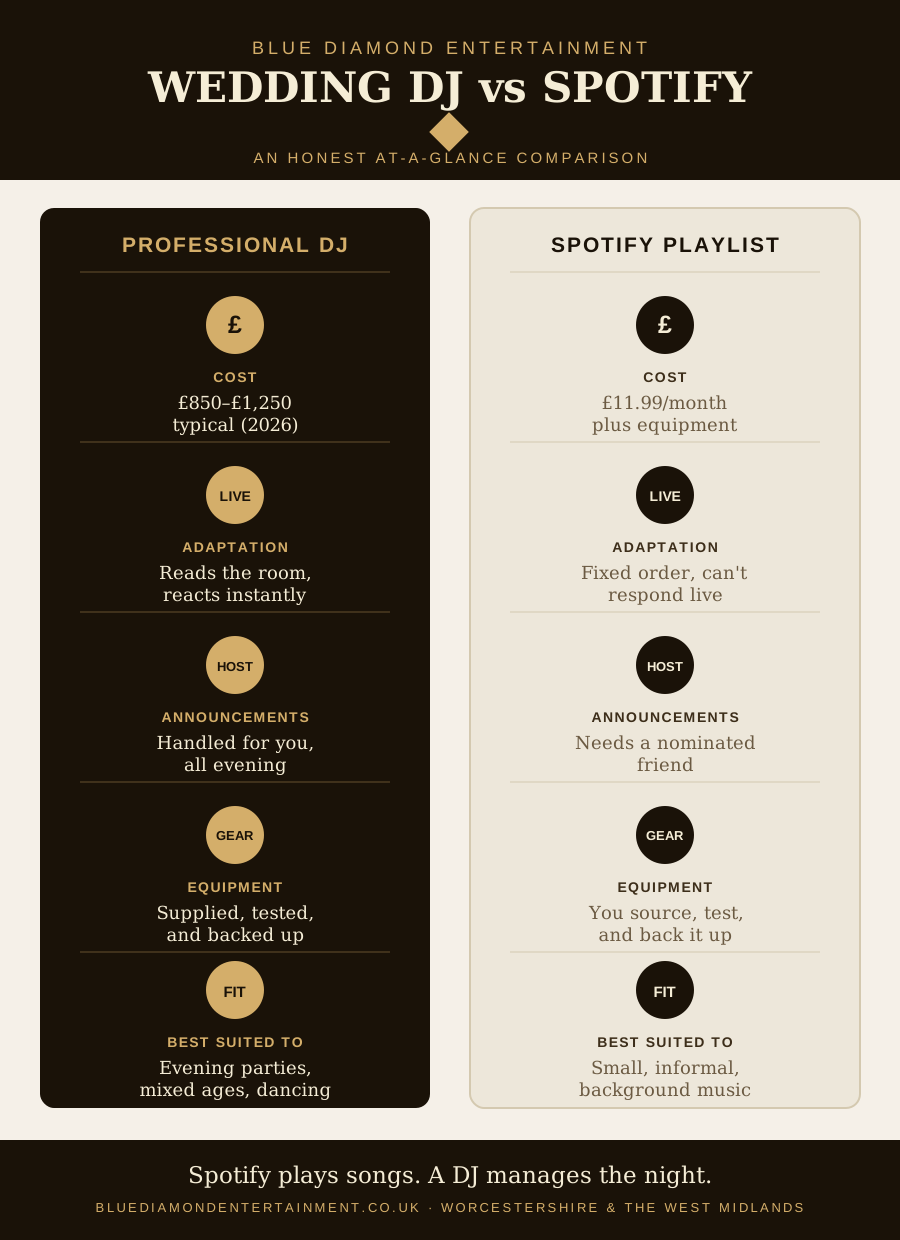
Before the detail, here's the shape of the decision at a glance. Neither column is "correct." Which one matters more depends entirely on what you want your evening to feel like.
| Consideration | Professional Wedding DJ | Spotify Playlist |
|---|---|---|
| Typical UK cost (2026) | £850–£1,250 mid-range; £250–£550 budget; £1,250–£2,200+ premium | £11.99/month Premium, plus equipment |
| Hidden costs | Usually included in the package | Speakers, subwoofer, mics, cables, stands, transport |
| Song control | Couple supplies preferences; DJ sequences live | Couple controls every track and its exact order |
| Ability to adapt | Can change direction instantly | Requires someone to intervene manually |
| Guest requests | Filtered and managed by the DJ | Interrupts the playlist, or needs an operator |
| Transitions | Live mixing, flexible timing | Crossfade reduces dead air but isn't live mixing |
| Announcements | Normally handled by the DJ | A friend, coordinator or celebrant needs to do it |
| Schedule changes | DJ absorbs delays without losing the plan | Someone must manually re-cue playlists |
| Equipment & backup | Supplied, tested, backed up | Must be sourced, tested and backed up by you |
| Dancefloor recovery | DJ notices a dip and changes tack | Continues regardless unless someone intervenes |
| Best suited to | Evening parties, mixed ages, dancing, formal moments | Small/informal weddings, background music, tight budgets |
Why Couples Consider Using Spotify
The pull toward Spotify is rarely about avoiding a DJ specifically: it's usually about money, control, or wanting a quieter evening. A Premium subscription costs a fraction of even a budget DJ booking, and for couples funding every part of a wedding themselves, that gap can pay for a photo booth, an extra hour of venue hire, or simply stay in the bank.
There's also the appeal of total creative control. Every track is yours: no "the DJ played a song we can't stand" stories, no compromise on that slightly obscure b-side that means something to the two of you. Some couples genuinely don't want a visible performer in the room: no microphone banter, no games, no flashing lights, just music running quietly in the background while people talk.
This especially suits smaller, low-key celebrations: a garden reception, a restaurant meal, a daytime-only gathering where dancing was never really the point. Building the playlist together over months can become a genuinely enjoyable part of planning the wedding, not just a cost-saving measure.
The Risks Most Couples Don't See Coming
A playlist knows what you chose. It doesn't know who's dancing right now, whether the room just went quiet, or whether your evening started 45 minutes late because photos overran. That's the fundamental gap: a playlist selects music; it doesn't programme an evening in response to what's actually happening in the room.
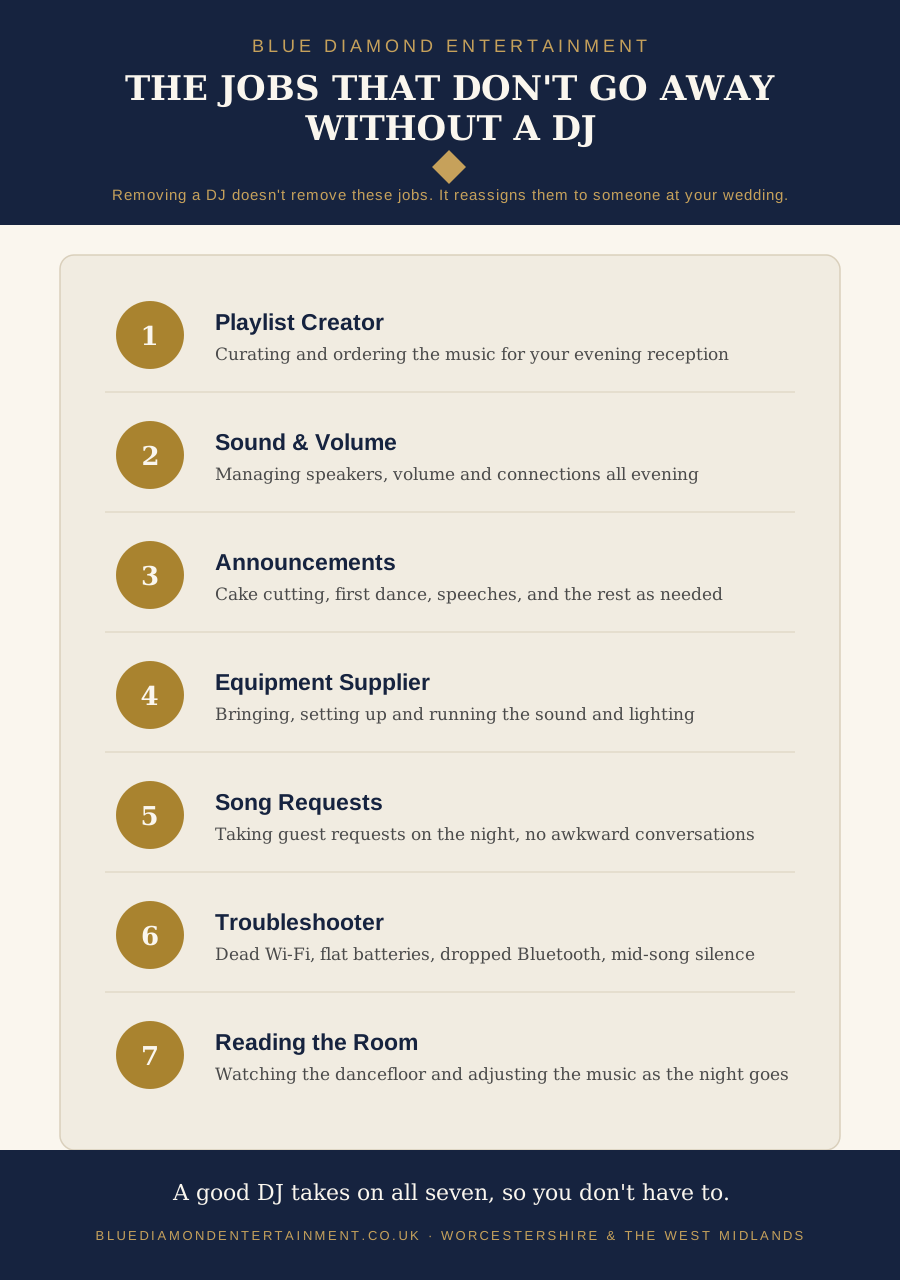
Removing a DJ doesn't remove the DJ's jobs: it reassigns them. Someone still has to start the ceremony track and fade it at the right second, cue the first dance, manage volume, make announcements, filter requests, and troubleshoot silence. That person is usually a friend or parent who'd rather be enjoying your wedding than operating it, and forum accounts consistently show the same failure pattern: the backup phone didn't have Premium so an advert played, shuffle got accidentally switched on, or a guest picked up the device and took over for twenty minutes.
Technical failure is the other quiet risk: patchy venue Wi-Fi, a Bluetooth speaker that drops out, a flat battery, an incoming call cutting through the speakers mid-song. None of these are exotic scenarios; they're the single most common complaint in real couples' accounts of DIY wedding music. Domestic speakers also often simply aren't built for a room full of people and a proper dancefloor, and advertised wattage alone isn't a reliable way to judge whether a system will actually fill a barn or a marquee.
What a Wedding DJ Actually Does
A wedding DJ's real job isn't pressing play: it's reading a room and adjusting in real time. That loop (choose a track, watch the response, adapt the next choice) is something a fixed playlist simply can't do on its own, and it's the single most repeated distinction across every source of research on this topic.
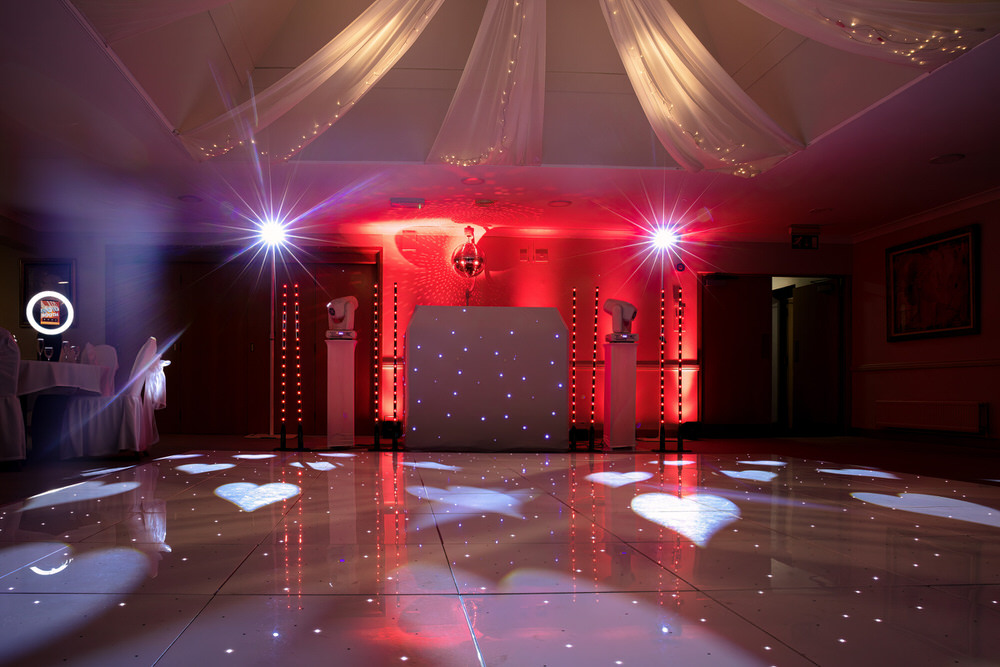
Beyond music, a DJ typically handles announcements (evening guest arrivals, the cake cutting, first dance, last song), liaises with your photographer, caterer and venue so key moments happen when everyone is actually ready, filters guest requests against your must-play and do-not-play lists, and brings backup equipment so a cable failure or dead battery never becomes your problem. It's less "playing songs" and more "managing the shape of the evening," which is why a well-chosen individual playlist can still feel disjointed without someone shaping how it unfolds live.
The Genuine Case for Hiring a DJ
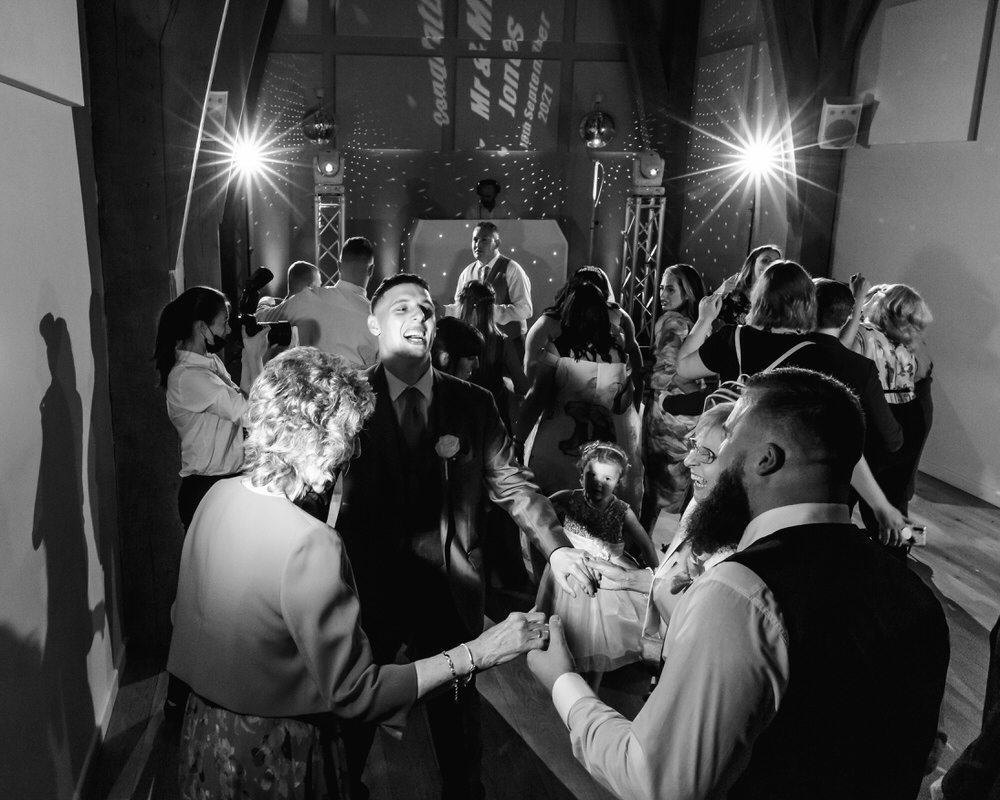
The strongest, most consistent argument for a DJ is live adaptation: the ability to notice a flagging dancefloor and pivot genre, era or tempo before the moment is lost. A fixed playlist can only continue as written; nobody is watching the floor and reacting to it.
A few examples from years of doing this: at one summer wedding, the meal and speeches ran almost an hour behind schedule because guests lingered outside in the evening sun; a fixed four-hour playlist built around the original timings would have hit its big moments to an empty room. Being there live meant simply holding back the key tracks until the floor was actually ready for them. At another reception, a request that looked risky on paper (an unfamiliar, fairly niche track) worked brilliantly because the timing in the room was right; the same song an hour earlier would likely have cleared the floor. And at one particularly loud, tightly sound-limited venue, a limiter tripped mid-set; having a backup system already patched in meant the couple never even noticed there'd been a problem.
Beyond the live element, a DJ typically brings equipment responsibility (PA, backup gear, insurance), filters requests so you're not caught in awkward conversations with guests, and takes the operational weight off you entirely, which is, for a lot of couples, worth almost as much as the music itself.
The Honest Downsides of Hiring a DJ
Cost is the obvious one. A mid-range UK wedding DJ in 2026 typically runs £850–£1,250, with budget options from around £250–£550 and premium, full-service bookings reaching £1,250–£2,200 or more, with prices shifting by region, season and day of the week. That's a genuine, sometimes significant, chunk of a wedding budget.
"Professional wedding DJ" isn't a single fixed standard, either. Quality varies: some DJs have limited wedding-specific experience, lean on an inflexible generic set, overuse the microphone, or don't carry backup equipment. A couple who wants every single track played in an exact, unchangeable order may also find a DJ's live judgement frustrating rather than valuable, though most good DJs will happily work from your must-play and do-not-play lists while still reacting live. And a DJ's presentation, style and physical setup need to actually suit your wedding; a large rig can feel wrong in a small restaurant or an intimate private room.
Is Spotify Really Cheaper?
Often, genuinely, yes, but not always by as much as it first looks. Spotify Premium is around £11.99 a month, but running a full evening's sound properly usually needs two decent speakers, a subwoofer for actual dancing, stands, a small mixer, wired and wireless microphones, cabling, and someone to set it all up and stay responsible for it throughout the night.
Current UK hire examples put a simple wedding PA package at roughly £150–£350, with larger evening-capable systems costing more; these figures vary a lot by location and spec, so treat them as examples rather than a national average. Compare that against a mid-range DJ at £850–£1,250, which typically already includes the PA, lighting, setup, breakdown, travel and public liability insurance. For a small, low-key, daytime-only gathering, the Spotify route can still come out considerably cheaper. For a full evening reception with proper sound coverage, the gap often narrows more than couples expect once every hidden line item is added up.
Is It Legal to Use Spotify at a Wedding?
This gets overstated on a lot of DJ websites, so here's the honest version. Spotify's own terms cover personal, non-commercial listening, and its service isn't intended to be broadcast publicly from a commercial premises such as a bar or restaurant. Separately, PRS for Music's tariff does not typically charge for genuinely private family events: a wedding reception by personal invitation, in a privately booked room, with no public access and no admission charge.
In practice, at a normal private wedding in a licensed venue, this is rarely a real legal exposure for the couple, because the venue usually already holds its own blanket music licence covering the room. It's fairer to describe this as "check with your venue" than "you'll be breaking the law." For professional DJs, though, a personal Spotify account isn't an appropriate commercial music source; that's a separate question from what a couple can play for their own guests.
The Hybrid Option
This is often the best answer for couples torn between the two, and it's the option most comparison articles skip entirely. Your playlist doesn't have to run your whole day, and a DJ doesn't have to control every second of it either.
Popular versions include: Spotify running quietly through the wedding breakfast and drinks reception, with a DJ taking over for the evening party where live reading and hosting duties actually matter; or handing your own inspiration playlist to a DJ as a genuine starting point (must-plays, do-not-plays, a clear sense of your taste) while they retain control of live sequencing and timing. Your playlist sets the direction. Your DJ manages the energy. Your favourite songs still matter, but the night isn't locked to a script that can't respond to the room in front of it.
When Each Option Is Probably Right for You
Spotify is probably the better choice if: it's a micro-wedding or restaurant-style reception, there's no formal dancefloor planned, the celebration is daytime-only, most guests will be more focused on conversation than dancing, your venue already has a suitable system and a staff member who can manage it, or your budget genuinely can't stretch to entertainment this year.
A professional DJ is probably worth it if: dancing is a real priority for you, your guest list spans multiple generations, you want a proper first dance, cake cutting and announcements handled smoothly, your venue provides no suitable sound system, you want to take live requests, your timings are likely to shift on the day (most do), or you simply don't want the technical responsibility resting on you or a guest. Guest count is a consideration here, not a rule: a 40-person wedding can have a packed floor all night, and a 150-person wedding can be entirely conversation-led. If you're still weighing this up, our guide to whether a wedding DJ is worth the money goes deeper, and if live music is also on your shortlist, see Wedding DJ vs Live Band.
How to Run a Spotify Wedding Properly
If Spotify is the right call for your day, doing it properly makes a real difference:
- Use Premium, not an ad-supported account.
- Download every playlist for offline use, and actually test offline playback beforehand.
- Use a dedicated device, not the couple's own phone.
- Turn off notifications, calls, and any battery-saving restrictions that could interrupt playback.
- Disable shuffle and unwanted autoplay.
- Build separate playlists for arrival, ceremony, drinks, dinner, first dance and evening dancing.
- Keep a second device and a backup audio cable on hand.
- Test the actual venue sound system in advance, not just your speaker at home.
- Appoint one sober, reliable person as operator, and keep the device out of guests' reach.
- Agree who's making announcements, and exactly when key songs need to start.
- Check the venue's position on sound limits, curfews and music licensing.
How to Choose a DJ Who's Actually Better Than a Playlist
Not every DJ delivers the advantages described above, so if you're going that route, a few questions are worth asking before you book:
- How do you learn our musical preferences, and can we give you must-play and do-not-play lists?
- How do you handle guest requests on the night?
- How much do you use the microphone?
- What happens if you're unwell? Do you have cover?
- What backup equipment do you bring?
- Is your equipment PAT tested, and do you carry public liability insurance?
- What's actually included in the setup: PA, lighting, mics, all of it?
- Will the person we're speaking to now be our actual DJ on the day?
Our Honest Verdict
Spotify is a music source. A wedding DJ is a person responsible for the music, the timing, the equipment, the hosting, the requests, and the atmosphere in the room. Some weddings genuinely only need the first of those things. Others benefit enormously from the whole package.
If your day is about a relaxed gathering with music as a backdrop, a properly planned Spotify setup can serve you very well. If you want a full evening reception that reads the room, adapts to your guests, and takes every piece of the operational weight off your shoulders, a good wedding DJ is very likely worth the investment. That's exactly how we approach every wedding at Blue Diamond: you help shape the direction with must-play, play-if-possible and do-not-play lists; we filter requests and manage the equipment and announcements; and you're free to actually be at your own wedding rather than running it.
If you'd like an honest read on what would suit your venue, guest list and budget (including if that turns out to be a playlist), we're happy to talk it through, no obligation.
Frequently Asked Questions
Can I use Spotify instead of a DJ at my wedding?
Yes, particularly for a small or informal wedding. You'll still need suitable speakers, offline downloaded music, a dedicated device, someone responsible for operating it, and a separate plan for announcements and requests.
Do I need Spotify Premium for a wedding?
Premium is strongly preferable: it gives you ad-free playback, offline listening, and full control over what plays next, all of which matter more at a wedding than in everyday listening.
Will Spotify work without Wi-Fi?
Downloaded Premium playlists play offline, but they need to be downloaded and tested beforehand. Keep a backup device and a wired connection available regardless.
Who makes announcements if there's no DJ?
A venue coordinator, toastmaster, celebrant or nominated friend can do it, but agree this before the wedding and make sure a proper microphone is available.
Can a DJ just play our Spotify playlist?
You can share it as a planning reference and a strong guide to your taste, but a professional DJ should generally work from their own properly sourced music library rather than a personal consumer Spotify account during a paid performance.
Is a DJ worth it for a small wedding?
It depends more on the atmosphere you want than the guest count. A 40-person wedding can have an energetic dancefloor all night, while a much larger one can be entirely conversation-led. If dancing matters to you, a DJ can still be worthwhile even at a small scale.
What happens if nobody's dancing?
A DJ can shift genre, era or tempo immediately to try to shift the mood. A fixed playlist will simply continue until someone intervenes. Neither option can force reluctant guests onto the floor.
Is Spotify legally allowed at a wedding?
Spotify's service is intended for personal, non-commercial use, and licensing for private wedding receptions depends on the venue and circumstances. In practice, most licensed venues already hold the cover needed, but it's worth confirming with your venue rather than assuming.
About the Author
Paul Hickey · Founder, Blue Diamond Entertainment
Paul Hickey is the founder of Blue Diamond Entertainment. Paul played his first gig in 1988 aged 16, and Blue Diamond Entertainment, established 2014, has been specialising in weddings since 2014. George joined in 2015 and is a partner. Paul still DJs occasionally alongside running the business, and also works within the wedding photography industry.
Blue Diamond Entertainment
Wedding entertainment specialists in Worcestershire and the West Midlands
We plan and deliver wedding entertainment for couples across Worcestershire, the West Midlands, and beyond. From your first dance to your final song, we take care of every detail so you do not have to.